Suffering from a Herniated Disc? Try This Method Instead of Surgery!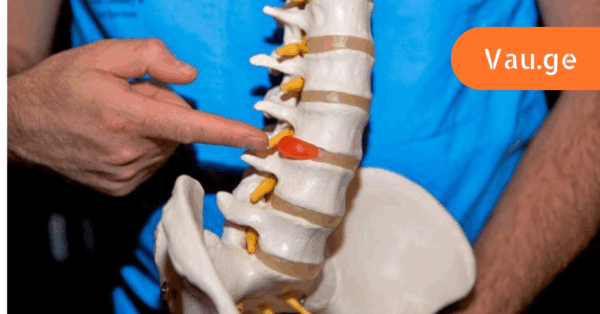
A herniated disc doesn’t always require surgical treatment. In many cases, the condition doesn’t severely compress the nerve root—and if that’s the case, surgery can often be avoided without serious consequences.
What Exactly Is a Herniated Disc?
When a disc becomes herniated, the tough outer ring called the annulus fibrosus ruptures, allowing a small portion of the gel-like nucleus pulposus to protrude outward. If the herniation is large enough, the disc can press on a nearby nerve root, often resulting in radiating pain—for example, sharp or burning pain in the leg.
But here’s the good news: many herniated discs remain asymptomatic or cause only mild discomfort. When symptoms do occur, non-surgical interventions—like targeted home remedies, physical exercises, or minimally invasive treatments—can sometimes lead to lasting improvement.
Natural Remedies to Relieve Symptoms
Potato Compress
One traditional remedy involves using a potato compress:
Take a medium-sized potato and slice it into thin rings, or better yet, grate it.
Apply the potato slices directly to the painful area of your back.
Leave them in place until the discomfort subsides.
This remedy is thought to soothe inflammation and provide a cooling effect to the affected area—while evidence is largely anecdotal, some people report noticeable relief.
Warm Garlic‑Infused Oil Compress
Another folk remedy uses garlic infused in warm oil:
Crush 10 garlic cloves and immerse them in a small amount of warm oil.
Let this mixture sit for a few minutes, then apply the warm mixture to the painful area.
Leave it in place for about three hours.
Garlic has natural anti-inflammatory and antimicrobial properties, and its warmth may help relax surrounding muscles and provide temporary relief.
Even while using these natural treatments, don’t forget the importance of back-strengthening exercises—they enhance muscle support around the spine and reduce the load on the herniated disc.
Ozone Therapy – A Medical, Non‑Surgical Option
If you’re looking for a minimally invasive medical alternative to surgery, ozone therapy is an option worth understanding.
What Is Ozone Therapy?
This technique typically involves injections of an oxygen-ozone (O₂-O₃) mixture into the paravertebral muscles or directly into the herniated disc itself. The idea is that ozone:
Reduces disc volume through dehydration and breakdown of disc material,
Decreases nerve root compression, and
Exhibits anti‑inflammatory effects, helping relieve associated pain.
PubMed
ncbi.nlm.nih.gov
Various studies have found ozone therapy to be effective and well tolerated:
A meta‑analysis of prospective trials reported significant improvements:
VAS (pain score) improved by an average of 4.25 points.
Oswestry Disability Index (ODI) improved by about 20.6 points.
PubMed
Another meta-analysis covering nearly 8,000 patients found:
Average VAS improvement of 3.9 points.
ODI improvement around 25.7 points.
A complication rate of under 0.1%.
PubMed
In real-world application:
A multi-center study using a handheld ozone device showed that over 90% of patients experienced improvements in pain and function up to 12 months post-treatment, with no significant adverse events.
PubMed
A high-quality randomized trial comparing ozone infiltration to surgery found:
Only 20% of patients in the ozone group ultimately required surgery.
In contrast, 60% in the oxygen-only control group ended up needing surgery.
Ozone treatment also reduced hospitalization time and costs.
sciencedirect.com
For very large herniated discs, a dual approach—injecting ozone through the facet joint as well as the standard route—resulted in a success rate of over 91%, with the majority of patients rated as “excellent” or “good.”
ncbi.nlm.nih.gov
Safety & Regulation: Proceed with Caution
Despite these promising results, ozone therapy remains controversial, especially in the United States:
The FDA (U.S. Food and Drug Administration) states that ozone is a toxic gas with no established medical application, and its therapeutic uses are not approved.
ვიკიპედია
Verywell Health
Some reputable health sources caution that inhaling ozone is particularly dangerous, and that the safety and efficacy of ozone therapy are still under investigation.
Verywell Health
Health
On the other hand, in parts of Europe, Latin America, and Asia, ozone therapy is more widely accepted and used as part of integrative or complementary medicine
Reported risks include:
Rare but serious complications such as gas embolism, allergic reactions, cardiovascular or pulmonary events, and even neurological damage.
For some, however, ozone therapy offers a way to avoid surgery, with a shorter recovery time and fewer complications—provided it’s performed in a well-controlled, medical setting, and patient profile fits.
Who Should Avoid Ozone Therapy?
Certain conditions make ozone therapy unsafe or inadvisable:
Pregnancy
Bleeding disorders or hemophilia
Known sensitivity or intolerance to ozone
Severe osteoarthritis or reduced motor function
Verywell Health
PubMed
If none of these apply, and you have a confirmed herniated disc—but wish to avoid surgery—ozone therapy may be worth discussing with a qualified specialist.
Summary: Choosing Your Path
Natural alternatives, like potato or garlic compresses, may offer mild, temporary relief. They’re low-cost, low-risk—and can complement other treatments well.
But if symptoms persist and you’re seeking something more potent than home remedies but less invasive than surgery, ozone therapy could be a viable bridge—especially given encouraging clinical data on pain relief, functional improvement, and low risk of serious complications.
That said, healthcare systems and regulations differ. Make sure you consult a qualified physician or spine specialist to:
Review the latest evidence, including suitability for ozone therapy in your region.
Understand risks, benefits, costs, and logistics.
Develop a comprehensive non‑surgical treatment plan—potentially combining physical therapy, pain management, lifestyle changes, and targeted interventions.
Final Takeaway
If you’re struggling with a herniated disc yet want to avoid surgery:
Begin with conservative approaches—gentle exercises, strengthening, posture correction, and natural compresses like potato or warm garlic oil.
If no improvement arises after a reasonable period, explore ozone therapy as a minimally invasive alternative—backed by solid clinical evidence in many countries.
Always seek guidance from a trusted medical professional knowledgeable in spinal care and integrative treatments.