Neck Pain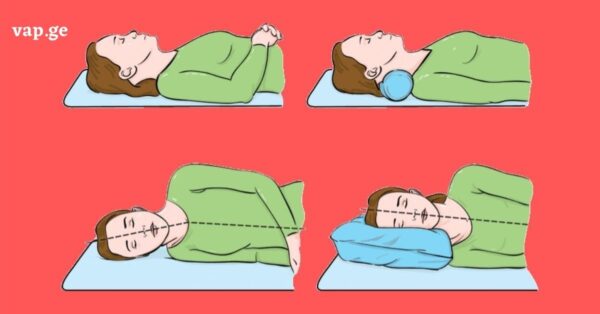
If you love sleeping on your side, your pillow should not be too high. The ideal height of the pillow should match the width of your shoulder. A pillow like that supports your neck in a neutral alignment.
Prefer sleeping on your back? A rolled towel or small cushion placed under your neck — between your pillow and shoulders — can help relieve neck pain. It lifts the neck slightly, giving extra support to the neck and spinal muscles, keeping the cervical spine in good alignment.
Pain in the Lower Back (Lumbar Region)
When we sleep, pressure in the knees, hips, and lower back is transferred into the spine. In side‑sleeping, bend your top knee and place a medium‑sized pillow between your legs. This helps the lower spine relax and relieves tension by reducing twisting stress on the lumbar region.
Shoulder Pain
Shoulder discomfort is often related to issues in the intervertebral discs between the shoulder blades (thoracic spine area). Start by reducing load and strain on the shoulder. If pain persists for more than two weeks, see a doctor. In any case, sleeping on the painful shoulder is not advised.
According to statistics, about 45% of the population wake up at night with pain or numbness in their arms or hands. These unpleasant sensations can often be caused by sleeping in a poor posture.
Pain and Heaviness in the Legs
If you sleep on your stomach, it’s better to change your habit. In that position, certain leg muscles may be placed in disadvantageous positions, which can lead to discomfort when you move. Before going to bed, try a gentle foot massage and perhaps a relaxing foot bath — these make great aids when dealing with foot pain. Also, try elevating your feet slightly during sleep (for example, by placing a pillow under your calves) to help ease heaviness.
Sleeping Tips for Correct Posture and Comfort
Try to sleep in a position that keeps your spine in its natural curves — avoid twisting or overbending.
Use a pillow of appropriate height and firmness — not too tall, not too flat — one that maintains your neck in line with your spine.
Choose a mattress that supports your body well — firm enough to prevent sagging, yet with enough give to conform to your body’s contours without pressing into your muscles.
If you have chronic discomfort, alternate sleep positions (side, back) rather than always favoring one side.
Before falling asleep, do light stretching of your back, hips, and legs to reduce stiffness.
Be consistent — good sleep posture over time helps reduce recurring pain.
Vap.ge is a platform that offers advice on health, self‑care, and daily living. Our goal is to provide you with information on natural remedies and recipes that can help you improve your health, look more beautiful, and simplify your daily tasks — all from the comfort of home. Most importantly, these methods allow you to enjoy the process while saving a considerable amount of money.
Through our articles, we aim to empower you with knowledge about:
Proper sleep habits and posture for spinal health
Natural ways to relieve muscle and joint discomfort
Homemade remedies and therapeutic routines
Tips for improving posture at work, during physical activity, and in everyday life
We believe that by combining small, consistent changes in your daily habits — such as how you sleep, sit, move, and rest — you can significantly reduce aches and pains, enhance your well‑being, and live more comfortably.