Mix Baking Soda and Castor Oil Together. It Is Said to Be Beneficial for Treating Many Conditions
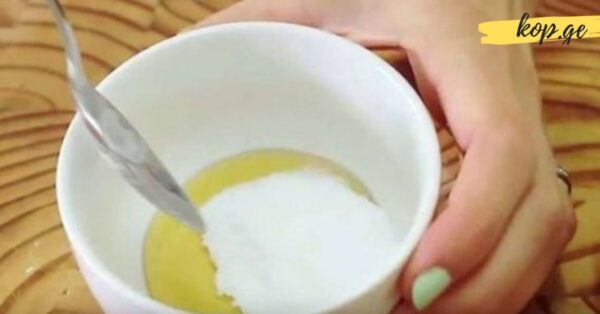
You may have already heard about the many health-related properties traditionally attributed to castor oil. In folk and alternative medicine, castor oil has long been used externally to support skin care, soothe dryness, and provide comfort to tired muscles. It is often mentioned in connection with wound care support, easing back discomfort, and helping reduce the appearance of dark or uneven skin spots.
Baking soda, also known as sodium bicarbonate, is a white crystalline substance most commonly found in powder form. Chemically, it is a salt composed of sodium and bicarbonate ions. In everyday life, baking soda is widely used for cooking, cleaning, and deodorizing. In alternative health traditions, it has also been discussed as a topical agent because of its mild abrasive and neutralizing properties.
Alternative and folk medicine sources sometimes suggest combining these two ingredients—castor oil and baking soda—for a wide range of purposes. Supporters of such practices believe that the softening, moisturizing nature of castor oil combined with the cleansing or balancing qualities of baking soda may offer certain external benefits when used carefully on the skin.
Below is an overview of how this combination is described in alternative health traditions, along with very important context and safety considerations.
Traditional and Alternative Claims
In non-medical sources, this mixture is often mentioned in relation to skin care and general comfort. For example, it is sometimes applied externally to areas of the skin to help soften rough patches, support the appearance of bruises, or calm mild irritation. Castor oil on its own is frequently used as a massage oil, while baking soda is sometimes added in very small amounts in homemade pastes for exfoliation.
Some alternative practitioners also claim that castor oil compresses may help relax muscles or joints when applied externally and covered with a warm cloth. In these traditions, the emphasis is usually on topical use rather than internal consumption.
There are also claims—often found online or in folk remedy lists—that this combination can help with a very wide range of serious medical conditions. These claims may include references to eye conditions, chronic diseases, infections, hormonal issues, or even cancer. It is extremely important to understand that such claims are not supported by reliable scientific evidence, and many of them can be misleading or potentially dangerous if taken literally.
Important Safety Clarifications
Castor oil and baking soda should not be viewed as universal remedies. While castor oil is sometimes used externally for skin and hair care, and baking soda has household uses, neither should be considered a treatment for serious illnesses.
Do not put castor oil, baking soda, or any mixture of them into the eyes, ears, or nose. Doing so can cause irritation or damage.
Do not ingest baking soda or castor oil as a “treatment” without medical supervision. Ingesting these substances incorrectly can lead to serious health problems.
Serious conditions such as cancer, cataracts, hepatitis, hearing loss, or chronic digestive disorders require professional medical care. Home remedies cannot replace diagnosis or treatment by a qualified doctor.
Many of the claims found in alternative remedy lists are based on personal anecdotes rather than clinical research. While some people may feel temporary relief from external use of oils during massage or skincare routines, this does not mean that the mixture cures diseases.
More Realistic and Safer Uses
When discussed responsibly, castor oil is most commonly used:
As a moisturizer for dry skin
For scalp massage to support hair care routines
As a carrier oil in gentle massage
Baking soda, when used externally and sparingly, may be used:
As a mild exfoliant
For deodorizing purposes
In household cleaning
Even in these cases, it is recommended to do a small skin patch test first to ensure there is no irritation or allergic reaction.
A Note on Health Information Online
The internet is full of articles and lists that promise quick and dramatic results from simple home ingredients. While it is understandable to be drawn to natural solutions, especially affordable and accessible ones, it is essential to approach such information critically. Not everything labeled as “natural” is automatically safe, and not every traditional claim is accurate.
Final Reminder
The combination of baking soda and castor oil is best viewed as a topic of traditional or alternative health discussion, not as a proven medical treatment. If you are experiencing ongoing pain, skin problems, infections, or any chronic or serious symptoms, the safest and most effective step is to consult a healthcare professional.
Always talk to a doctor before trying any remedy that claims to treat illnesses. Natural products can sometimes support comfort or self-care routines, but responsible use and professional guidance are key to protecting your health.