


How to Remove Warts from Your Hands at Home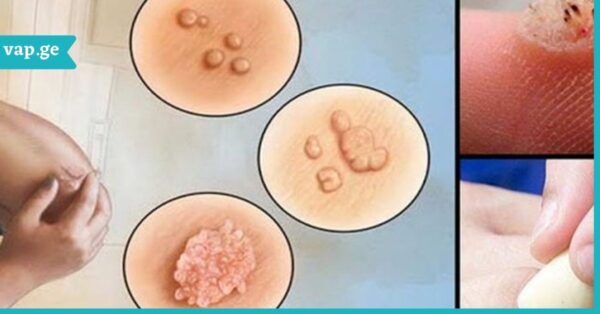
Warts are among the most common skin issues, especially in adolescents. According to statistics, about 75% of people will experience at least one wart in their lifetime.
Today, it’s well established that a wart is a benign skin neoplasm caused by the human papillomavirus (HPV). Over time, various strains of the virus have been identified, each responsible for different types of warts. The two most frequent types are:
Common warts (about 65–70% of cases) – These are usually painless. They appear as grayish-white, smooth nodules. Their surface can develop projections that give a cauliflower-like appearance. They often appear on fingers, the outer surface of the hand, or the face, but may also be found elsewhere on the body.
Plantar warts (about 30% of cases) – These form on the soles of the feet, especially in people with sweaty feet. They are hard, dirty-gray in color, and have an uneven, bumpy surface. If pressed, they may be painful, causing discomfort when walking.
Nowadays, there are many treatment options—both medical and folk (home) remedies. Some methods help, some less so. Below is one simple, fast, and often effective approach described in folk tradition.
Removing Warts from the Hands in 3 Days — A Garlic Method
This folk remedy claims you can eliminate warts from your hands in about 3 days using garlic. Here’s how the method is described and expanded with additional caution and context.
Ingredients Needed
Fresh garlic (as many cloves as there are warts)
A knife
Soft cloth or bandage
Instructions
Prepare the garlic
Peel one garlic clove and cut it in half (lengthwise) with a knife.
Apply to the wart
Place one half of the garlic clove directly over the wart, with the freshly cut side touching the wart.
Cover with cloth or bandage
Cover the garlic‑over‑wart area with a soft cloth or gauze and secure it so that it stays in place.
You may leave it on overnight.
Expect a burning sensation
After some time, you may feel a slight burning or stinging sensation—this is said to indicate that the treatment is working.
Observe changes next day
On the second day, remove the cloth. You should see the wart beginning to shrink or darken.
Repeat
Perform the same procedure nightly for 3 to 5 nights. According to folk reports, the wart may disappear permanently from the hand.
Why Garlic? Traditional Rationale & Scientific Evidence
In folk medicine, garlic is prized for its antiviral, antimicrobial, and anti-inflammatory properties. The compound allicin, released when garlic is crushed, is often credited with causing the antiviral effect.
Some home remedy guides recommend placing crushed garlic on a wart, then covering it with a bandage, repeating daily.
Garlic is thought to penetrate the skin and act against virus-infected cells.
Rexburg Skincare
A few small studies suggest that garlic extract might help remove warts over several weeks of use.
However, several cautions are warranted:
Skin irritation / burns: Garlic in direct contact with skin, especially for prolonged periods, can cause chemical burns, redness, or blistering.
Healthline
Effectiveness varies: Not all warts respond; deep or large warts may not disappear fully with this method.
Pitfall of self‑diagnosis: Some skin growths are not warts. Misapplying strong remedies on an incorrect diagnosis may harm healthy skin.
In medical guidance, home remedies are used with caution and often recommended in milder cases. Over-the-counter treatments like salicylic acid or professional care (cryotherapy, excision) are more proven.
Additional Home Remedies & Adjuncts for Warts
You may consider combining or alternating methods. Some popularly recommended home remedies include:
Apple cider vinegar (ACV)
Dilute ACV (e.g. 2 parts vinegar to 1 part water), soak a cotton ball, apply to the wart, and cover it. The vinegar’s acidity might act similarly to salicylic acid, gradually eroding wart tissue. But caution: direct ACV can irritate skin.
Duct tape occlusion
Cover the wart with duct tape continuously for several days (4–7 days), then remove, soak in warm water, file away dead skin, then reapply tape. Repeat for weeks. The method is thought to stimulate immune response.
eMediHealth
Tea tree oil / essential oils
Diluted tea tree oil or other essential oils (mixed in a carrier oil) are sometimes used on warts. They may support antiviral or antimicrobial effects.
Healthline
+2
eMediHealth
+2
Banana peel
The inside of a banana peel is placed on the wart (inner side touching skin), taped overnight, and repeated daily. The peel contains enzymes and mild acids that some believe may act on the wart.
Chemist4U
+1
Aloe vera / soothing gels
Aloe vera gel is used to soothe irritated skin and may aid healing. Not strongly proven for wart removal but can help comfort the area.
Vitamin C paste / lemon juice
Crush vitamin C tablets, mix with water or lemon juice, apply to wart, cover with bandage. The acidity may help peel away layers slowly.
Facty
Baking soda & other pastes
Mixing baking soda with water or vinegar to make a paste and applying it to the wart is another folk option.
Facty
These methods may take weeks to months to show results and are less reliable than medical treatments.
Safety, Warnings & When to See a Doctor
Always perform a patch test before applying strong substances (like garlic) to limit risk of adverse reaction.
If you feel excessive pain, burning, blistering, or if the skin becomes ulcerated, stop the treatment immediately.
Warts that persist, grow, bleed, spread, or occur on sensitive areas (face, genitals, mucous membranes) should be evaluated by a dermatologist.
Don’t use strong acids or home remedies on children without medical supervision, especially near sensitive skin.
Be cautious if you have underlying conditions like diabetes, poor circulation, or immune suppression, where skin injuries can worsen.
Understand that even with treatment, warts can recur because the virus (HPV) may still reside in skin cells or nearby tissue.






















