


The Fukutsudzi Method: Understanding the Japanese Towel Exercise for Posture and Alignment
The Japanese towel method, also known as the Fukutsudzi method, has gained significant popularity worldwide as a simple, five-minute daily exercise.1 Developed by Japanese reflexologist Dr. Toshiki Fukutsudzi, the technique was originally designed to correct posture and alleviate back pain by realigning the pelvis.2 While its widespread fame has led to some exaggerated claims about its ability to cause rapid weight loss, increase height, and reshape the body, the true benefits lie in its powerful effect on spinal health and overall body alignment. This method is a testament to how small, consistent efforts can lead to meaningful improvements in physical well-being.
At its core, the Fukutsudzi method is a passive stretch that focuses on the deep-seated muscles and connective tissues of the trunk. The exercise itself is incredibly simple, requiring only a floor and a rolled-up towel.3 The principle behind it is that many common issues, such as lower back pain, poor posture, and even a bulging stomach, can be attributed to a misaligned pelvis. By placing a firm, rolled towel at a specific point on the spine and allowing the body to relax around it, the method aims to gently encourage the pelvis and spine to return to their natural, correct positions.4 This is a subtle process of correction, not a dramatic physical change, but its effects can be felt over time.
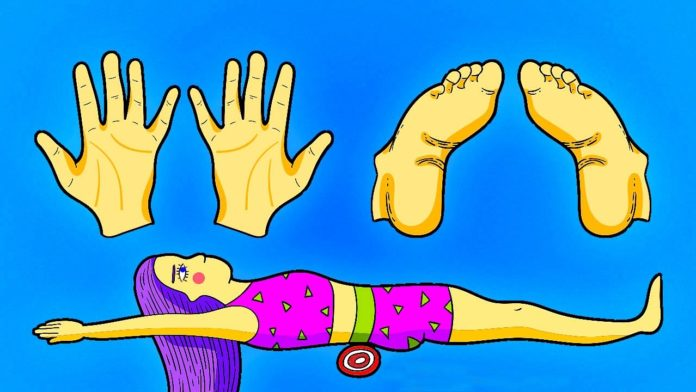
To perform the exercise correctly, you will need a yoga mat or a soft surface on the floor and a towel.5 Roll a bath towel tightly into a cylinder approximately 15 to 20 inches long and about 4 inches in diameter, and secure it with a string or rubber bands so it doesn’t unroll. Sit on the floor with your legs straight out in front of you, and place the rolled towel directly behind your lower back.6 Slowly lie back, ensuring the towel is positioned under your back, precisely beneath your navel.7 Once you are lying down, your feet should be positioned with your big toes touching and your heels about 8 to 10 inches apart. Extend your arms above your head with your palms facing down, allowing your pinky fingers to touch.8 This position might feel challenging at first, particularly for those with tight shoulders or a stiff spine.
The entire process should last for five minutes.9 During this time, the goal is not to perform any strenuous movements but to simply relax and breathe deeply.10 The stretch itself, with the towel creating a gentle arch in the spine, is what works to realign the pelvic bones and stretch the abdominal muscles. When you finish, it is crucial to carefully roll onto your side and slowly sit up to avoid straining your back. Abruptly standing up can negate the benefits of the stretch. Initially, performing the exercise for five minutes might be difficult, and it is perfectly acceptable to start with two or three minutes and gradually increase the duration as your body adapts.11
One of the most significant and scientifically plausible benefits of the Fukutsudzi method is improved posture. In our modern world, where many of us spend hours hunched over computers and smartphones, poor posture has become a widespread problem. This can lead to back pain, neck stiffness, and a less-than-confident appearance. By consistently realigning the spine and pelvis, the towel exercise helps to correct the rounded shoulders and forward-sloping posture that are so common today. Over time, this can lead to a taller, more upright stance. While the exercise does not physically increase a person’s height by adding to their bone structure, a corrected posture can make you appear taller by simply allowing your spine to reach its full, natural length.
The claim that the exercise leads to significant weight loss is often misunderstood. The exercise itself does not burn calories or fat in the way that traditional cardiovascular exercise does. However, by correcting the posture and realigning the pelvic bones, the method can have an indirect effect on a person’s body shape.12 When the pelvis is misaligned, it can push abdominal organs forward, creating the illusion of a larger stomach. By realigning the pelvis, this effect can be reduced, making the stomach appear flatter and the waistline smaller.13 This is not fat loss but a structural correction that creates a more toned and streamlined appearance. True weight loss, which involves a reduction in body fat, requires a balanced diet and regular physical activity, and the Fukutsudzi method is not a substitute for these essential habits.14
Similarly, the claims about the method improving breast shape are also misleading. The exercise does not alter breast tissue or size. Instead, by improving posture and pulling the shoulders back, the method can create the visual effect of a more lifted and prominent chest. This is purely an optical result of better posture and spinal alignment, not a physical change to the breast itself. It is important to approach these claims with a critical eye and focus on the realistic, achievable benefits of the exercise.
The main secret to the effectiveness of the Fukutsudzi method lies in its regularity. Consistency is paramount. The body’s muscles and joints have memory, and to counteract years of poor posture, a new habit must be consistently reinforced. Performing the stretch daily, as prescribed, trains the body to hold its correct alignment. Missing a day here or there might not completely derail progress, but frequent interruptions will make it difficult to achieve and maintain the desired results. Like any form of exercise or wellness routine, the benefits are cumulative over time.
In conclusion, the Japanese towel method is a simple yet powerful exercise that is best understood as a tool for posture correction and spinal alignment. While it may not be the “magic bullet” for weight loss or dramatic physical changes that some claims suggest, its benefits for spinal health are real and tangible. By dedicating just five minutes a day to this gentle stretch, you can work to improve your posture, reduce back pain, and achieve a more confident, upright stance.15 As with any new exercise routine, it is always wise to consult with a doctor or a physical therapist, especially if you have a pre-existing back condition. The method should be viewed as a complementary practice to a balanced diet and regular exercise, and not as a replacement for them.16






















